BS 8599 has been updated, changing how employers should think about workplace first aid provision. We explain the key changes, what they mean for your first aid risk assessment and how Arco can help you put the right equipment, training and support in place.
Workplace first aid provision has moved on. With the publication of BS 8599-1:2019+A1:2026, UK employers* are being encouraged to take a more practical, risk-based approach to first aid kits, specialist equipment and Automated External Defibrillators (AEDs). The amended standard was published on 30th April 2026 and now covers both the contents of workplace first aid kits and the provision and placement of AEDs in the workplace.
For employers, the key message is clear: first aid arrangements should not be based on headcount alone. They should reflect the real risks in the workplace, the number of people who may be on site, the layout of the premises, the needs of mobile or remote workers and the types of injuries that could reasonably occur.
As Experts in Safety, Arco can help organisations review their first aid provision and put the right equipment, training and support in place to help meet the updated standard. We also provide a wide range of first aid kits where a BS 8599-1 contents list is available.
*If your business operates in the Republic of Ireland, these changes aren’t a legal requirement, but they are a timely reminder to check whether your first aid provision is effective and compliant with Irish health and safety legislation.
What is BS 8599-1:2019+A1:2026?
BS 8599-1 sets out requirements and guidance for workplace first aid kits, including their contents, containers and the provision of AEDs. The 2026 amendment widens the focus from standard workplace first aid kits to a broader first aid system that considers AED access, burns provision, eyewash, personal issue kits and critical injury packs where required by risk assessment.
Who should comply with BS 8599 guidance?
Any workplace, organisation or venue responsible for employee, contractor or visitor safety should follow BS 8599 guidance. This includes offices, retail stores, warehouses, manufacturing sites, schools, hospitality venues, construction sites and transport hubs. Self-employed professionals and small businesses are also expected to comply where first aid provisions are required.
In practice, if you manage a site where people work or attend, you should assess risks and equip first aid kits, travel kits and vehicle kits in line with BS 8599 recommendations.
Key changes to BS 8599 employers need to understand
1. AEDs should be part of workplace first aid planning
One of the most significant updates is the inclusion of AED provision and placement within the workplace first aid standard. Employers should consider whether AEDs are required as part of their first aid needs assessment, taking into account the number of people on site, the size and layout of the premises, public access, response times and any specific workforce or visitor risks.
Where an AED is provided, it should be easy to find, clearly signed, maintained and positioned so it can be retrieved quickly in an emergency (for businesses with five or more people on site during operational hours, the AED must be retrievable and ready for use within two minutes of any location on premises). Larger, multi-floor or high-footfall sites may need more than one AED to provide effective coverage.
2. First aid provision should be risk-based, not just headcount-based
Employers already have duties under the Health and Safety (First-Aid) Regulations 1981 to provide adequate and appropriate first aid equipment, facilities and personnel. The updated standard reinforces the importance of assessing what is actually needed for the workplace, rather than simply buying a basic kit because a certain number of people are employed.
A good first aid needs assessment should consider the nature of the work, known hazards, previous accidents, shift patterns, lone working, visitors, contractors, off-site work, company vehicles and how quickly emergency medical help could arrive.
3. Specialist hazard kits may be needed
Standard first aid kits may not be enough where the workplace presents specific hazards. If a risk assessment identifies a risk of burns, eye contamination, life-threatening bleeding or other specialist injuries, employers should provide suitable additional equipment.
This may include burn kits for kitchens, workshops and manufacturing environments; eyewash kits for areas where chemicals, dust or debris could affect the eyes; and catastrophic bleed kits or critical injury packs for higher-risk settings such as construction, engineering, logistics, warehousing or public-facing locations.
4. Mobile workers and vehicles should not be overlooked
First aid responsibilities do not stop at the office, warehouse or site gate. Employers should also consider workers who travel, drive company vehicles, work remotely or operate away from the main premises.
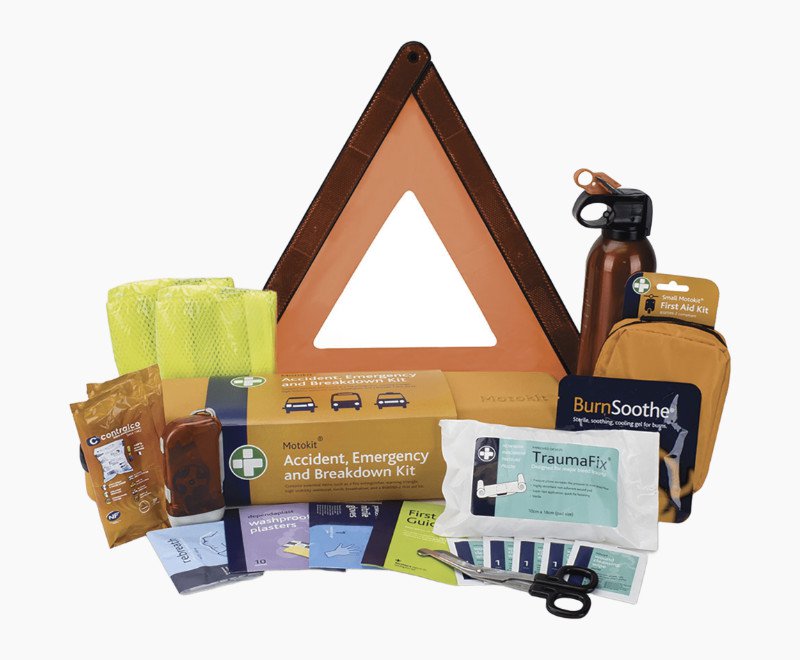
Suitable car first aid kits and travel kits can help ensure employees have access to essential supplies when they are on the move.
Updated resuscitation techniques and first aid training
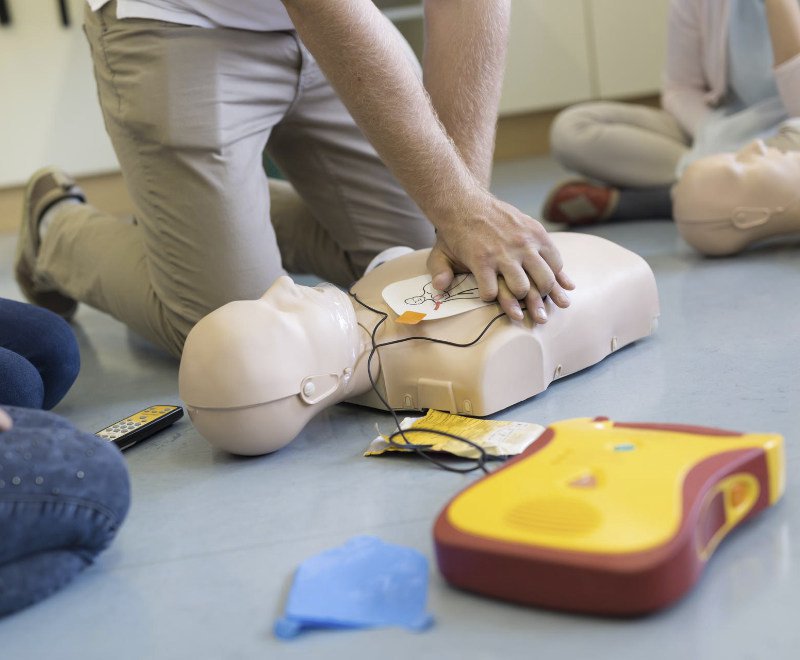
Equipment is only part of effective first aid provision. Employers should also make sure first aiders receive training that reflects current Resuscitation Council UK (RCUK) guidance, including CPR, AED use and airway management. Recent updates have placed renewed focus on effective AED pad placement, drowning response, rescue breaths where appropriate and the use of the jaw thrust technique where a spinal injury is suspected.
First aid training should be reviewed regularly, with requalification completed before certificates expire and refresher training considered to keep skills current and confidence high.
Record keeping, signage and visibility
To maintain compliance with the Health and Safety (First-Aid) Regulations 1981, employers should keep first aid arrangements visible, accessible and documented. Accident books help organisations record incidents, identify patterns and update risk assessments. Risk assessment books support structured reviews of workplace hazards and first aid needs. Clear first aid and AED signage helps people locate equipment quickly when every second matters.
Signage should be easy to understand and placed where it supports rapid response, including near first aid points, AEDs, eyewash stations, accident reporting points and specialist hazard kits.
Specialised burn kits
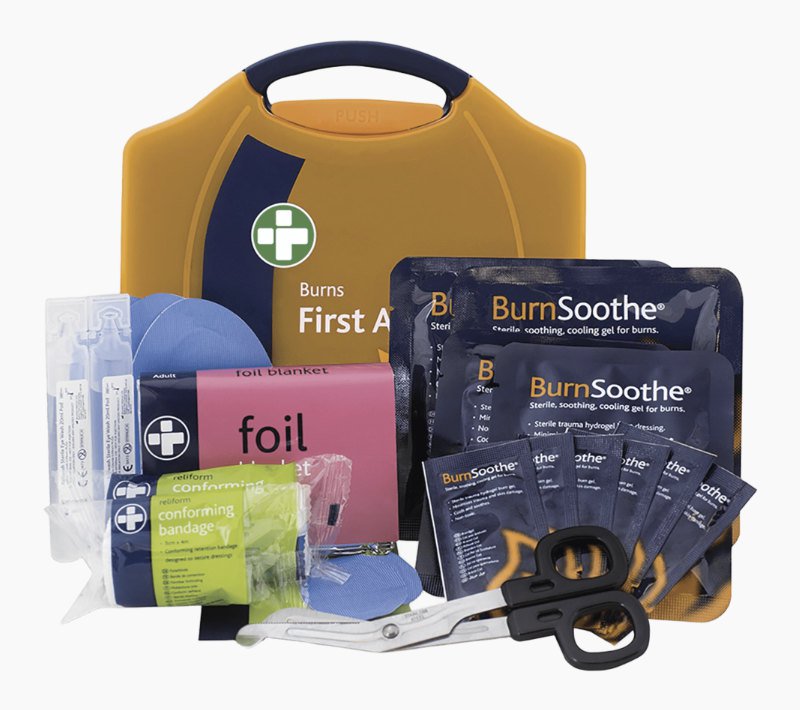
Where a first aid needs assessment identifies a higher risk of thermal injuries, employers should consider providing dedicated, standalone burn kits in addition to standard workplace first aid kits. This is particularly important in environments such as commercial kitchens, workshops, manufacturing areas and laboratories, where burns are more likely to occur.
Standard first aid kits may only contain a small number of basic burn dressings. A dedicated burn kit can provide a more suitable range and quantity of treatment products, such as water-based hydrogel dressings, facial burn dressings and conforming bandages designed to protect the injury without sticking to the wound.
Eyewash provision
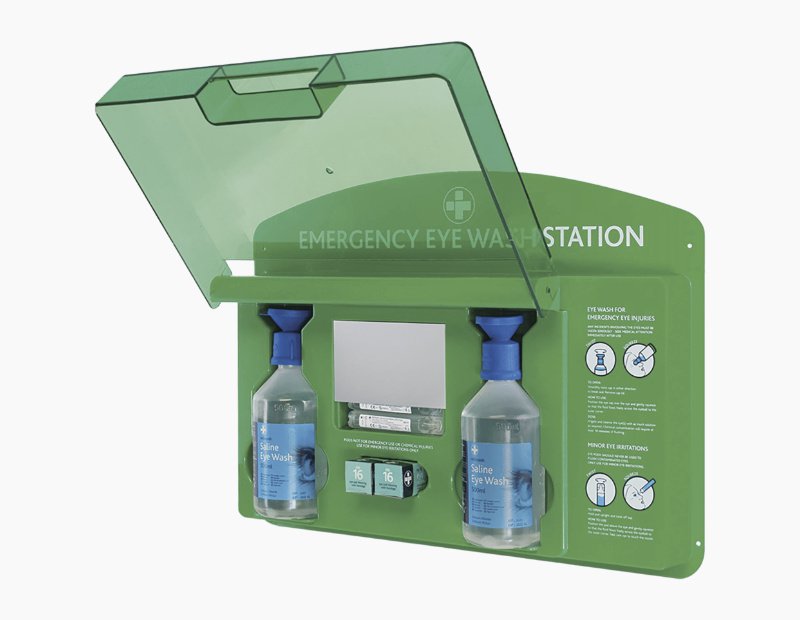
Employers should also review whether standalone eyewash kits are needed in areas where there is a measurable risk of eye contamination. This may include workplaces where employees handle chemicals, work around airborne dust or face the risk of flying particulate debris.
While standard workplace first aid kits may include basic eye pads for protection, eyewash provision is designed to help flush hazardous contaminants from the eye. Suitable eyewash kits typically include sterile saline solution and should be located where they can be accessed quickly in an emergency.
What are the key components of a compliant first aid kit under BS 8599?
Under BS 8599, a compliant first aid kit typically includes: assorted sterile dressings and bandages, adhesive plasters, eye wash and eye pads, foil blanket, burn treatment, antiseptic wipes, scissors and tweezers, triangular bandages, tape, nitrile gloves, a resuscitation face shield, finger dressings and a BS 8599-1 contents list – sized to the workplace risk and number of employees.
How Arco can help employers respond to the updated BS 8599-1:2019+A1:2026 standard
At Arco, we can support employers like you with a wide range of first aid equipment, workplace safety products and expert services to help you review and strengthen your first aid provision for BS8599 compliance.
AEDs and accessories: helping employers improve access to defibrillation across workplaces, sites and public-facing areas
Risk assessment books and accident books: supporting documented assessments, incident recording and ongoing review
Car first aid kits: helping protect employees who drive or work away from the main workplace
Specialist hazard kits: including catastrophic bleed kits, burn kits and eyewash kits for higher-risk environments
Safety signage: helping people quickly identify first aid points, AEDs and emergency equipment
First aid training and consultancy: Arco Professional Safety Services can help employers review their arrangements and provide training that reflects current resuscitation techniques and workplace risks
Next steps for employers
Employers should review their first aid needs assessment against the updated BS 8599-1:2019+A1:2026 standard, check whether AED access is sufficient, confirm that specialist hazards are covered and make sure first aiders are trained in current techniques.
At Arco, we can help you identify gaps, source the right products (creating a BS 8599-1 contents list for first aid kits) and access professional safety support so your workplace is better prepared for first aid emergencies.
[{"pageName":"productReference","id":"56G0600","code":"PIM000000000015665","name":"BurnSoothe Sterile Burn Dressing 20cm x 20cm","brand":"Reliance Medical","position":1,"price":9.996,"currencyCode":"GBP","category":"First Aid/Medical Supplies and Instruments/Burn and Wound Dressings","list":"Product Carousel -","additionType":"Product Carousel -","productAvailability":"In Stock","productPACStatus":"Core"},{"pageName":"productReference","id":"55G1203","code":"PIM000000000007298","name":"Reliance Medical Large British-Standard First Aid Kit","brand":"Reliance Medical","position":2,"price":59.988,"currencyCode":"GBP","category":"First Aid/First Aid Kits, Cabinets and Refills/First Aid Kits","list":"Product Carousel -","additionType":"Product Carousel -","productAvailability":"In Stock","productPACStatus":"Core"},{"pageName":"productReference","id":"4F3006","code":"PIMM00000000155872","name":"Reliance Medical Motokit Stockholm British-Standard Vehicle First Aid Kit","brand":"Reliance Medical","position":3,"price":27.983999999999998,"currencyCode":"GBP","category":"First Aid/First Aid Kits, Cabinets and Refills/Travel and Vehicle First Aid Kits","list":"Product Carousel -","additionType":"Product Carousel -","productAvailability":"In Stock","productPACStatus":"Core"},{"pageName":"productReference","id":"B473330","code":"PIM000000000157066","name":"Mediana A16 HeartON Automated External Defibrillator","brand":"Mediana","position":4,"price":1745.988,"currencyCode":"GBP","category":"First Aid/Defibrillators and Accessories/Defibrillators","list":"Product Carousel -","additionType":"Product Carousel -","productAvailability":"In Stock","productPACStatus":"Core"},{"pageName":"productReference","id":"55G1301","code":"PIM000000000007303","name":"Reliance Medical Aura Small British-Standard First Aid Kit","brand":"Reliance Medical","position":5,"price":23.987999999999996,"currencyCode":"GBP","category":"First Aid/First Aid Kits, Cabinets and Refills/First Aid Kits","list":"Product Carousel -","additionType":"Product Carousel -","productAvailability":"In Stock","productPACStatus":"Core"},{"pageName":"productReference","id":"55G9200","code":"PIM000000000007508","name":"Reliwash Deluxe Eyewash Station","brand":"Reliance Medical","position":6,"price":22.992,"currencyCode":"GBP","category":"First Aid/Eyewash, Face Wash and Shower Stations/Eyewash and Face Wash Kits","list":"Product Carousel -","additionType":"Product Carousel -","productAvailability":"In Stock","productPACStatus":"Core"}]